
Between 2022 and 2024, prime office values fell 25–35% in London and New York. In Paris and Singapore, CBD assets repriced by 15–25%. Tokyo compressed returns even as occupancy held.
The logic that has governed real estate allocation for decades — concentrate on gateway cities, stay close to the liquidity, trust that global demand underwrites values — is quietly unravelling. And most portfolios haven’t noticed yet. The markets chosen for their safety delivered the cycle’s sharpest reminder that concentration risk doesn’t disappear just because the addresses are prestigious.
The Problem with Playing It “Safe”
The 2022–2024 repricing cycle exposed a structural fragility in gateway-heavy portfolios that diversification advocates have long warned about: correlated risk. When institutional capital crowds into the same cities, the same asset classes, and the same currency exposures, a macro shift doesn’t just hit one position — it hits all of them at once.
The pattern is consistent across gateway markets. Average prime yields remain 50–100 basis points below long-run averages — even after the correction. Dubai, which entered this institutional tier rapidly post-2022, has seen compressed yields follow the same pattern as capital flooded in.
The paradox is clear: Gateway markets chosen for their safety delivered correlated losses exactly when diversification mattered most. Structural shifts — AI-driven demand and persistent hybrid work — have bifurcated office markets in ways that previous cycles never did. Some assets will recover. Others won’t.
Compressed yields, overheated valuations, and regulatory headwinds have made traditional gateway allocations increasingly difficult to justify on a risk-adjusted basis. Yet inertia — and the comfort of perceived liquidity — keeps capital anchored in markets where competition is fiercest, and return premiums have long since been arbitraged away.
Where the Opportunity Is Actually Hiding
The same repricing that punished overexposed gateway portfolios created a compelling entry point in high-growth secondary markets: cities with structural demographic tailwinds, persistent supply constraints, and meaningful yield premiums over their gateway counterparts.
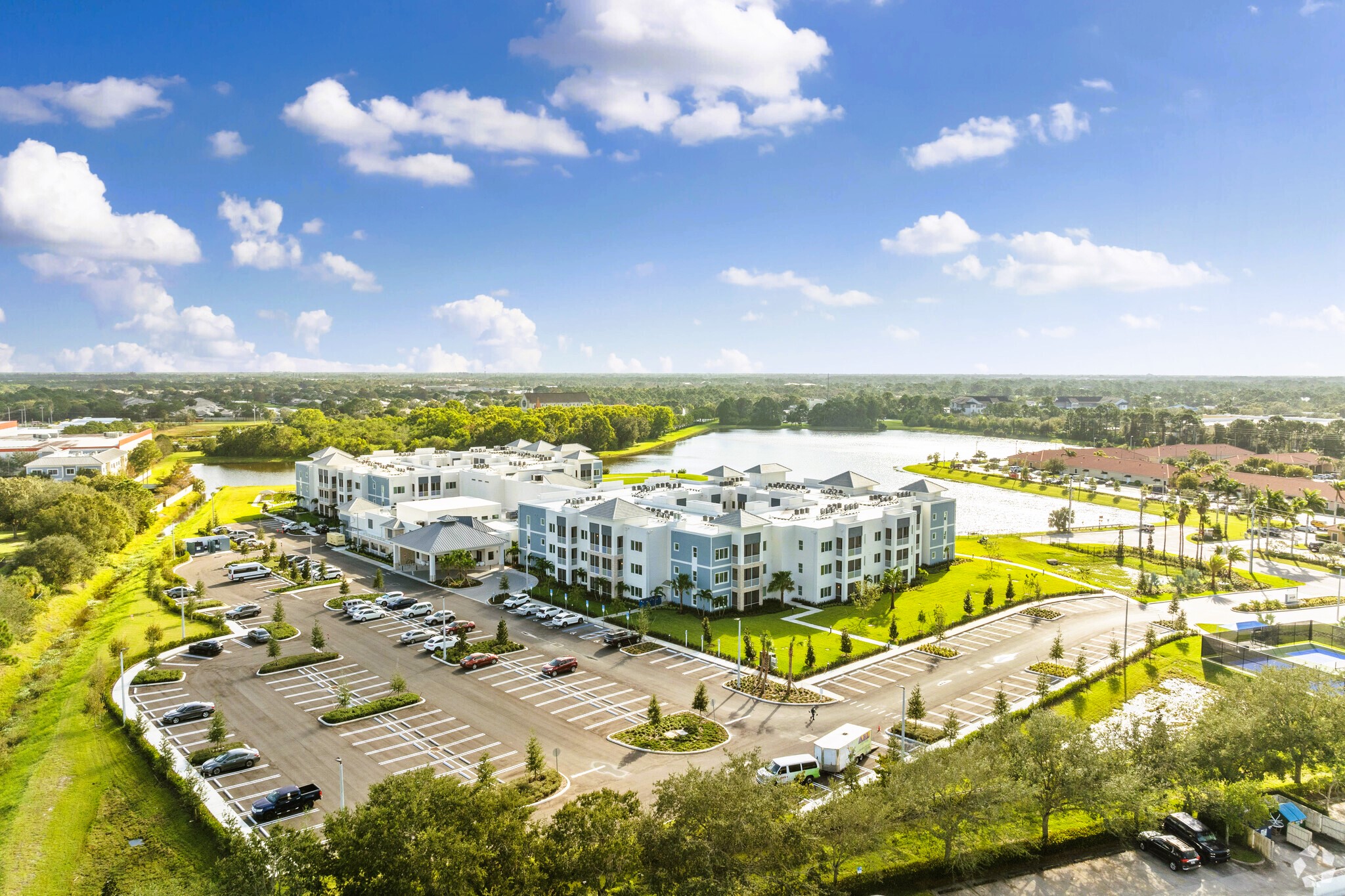
Markets like Houston and South Florida in the United States, and Sydney and Melbourne in Australia, offer something increasingly rare in institutional markets: smaller and mid-size ticket opportunities with less competition and differentiated risk-return profiles. Cultural alignment for cross-border investors. And critically — real income yield, not just hoped-for capital appreciation.
Take Houston as a live example. A 352-unit apartment community near the Texas Medical Center, the world’s largest medical complex anchoring 120,000 jobs and 10 million annual visitors, recently traded at a 54% discount to comparable sales from just 36 months prior. More broadly, we are seeing deals across the Houston market transact below their last recorded sale prices going back a full decade, and in several cases, at or below outstanding debt balances. These are not operationally distressed assets. They are capital stack distressed, well-located properties caught in a broader repricing driven by lender-exit pressure and overleveraged ownership structures, circumstances that created the entry point, not the asset.
The projected leveraged IRR is 15%, on a conservative 6.75% exit cap rate, with a 2.50x equity multiple over a seven-year hold. Comparable gateway US multifamily? 4.5–5.0% cap rates for materially higher execution risk. The competitive set on this acquisition? Predominantly local operators. International capital, as usual, is still looking elsewhere.
For European and Asian investors, the case deepens further. AUD and USD-denominated returns provide genuine currency diversification and a natural inflation hedge at a time when portfolio construction demands both.
A Framework for Accessing Institutional Quality Outside the Crowd
Geographic diversification in real estate is straightforward in theory and genuinely difficult in practice. Cross-border transactions involve currency complexity, legal and regulatory variance, operational distance, and market knowledge that takes years to build. Most international capital simply doesn’t compete in these markets — which is precisely what makes them attractive.
The framework that works is built on three pillars. First, deep local market knowledge — not a data subscription, but cycle-tested relationships with operators, brokers, and lenders who surface off-market flow before it reaches international desks. Our local experience spans more than four full market cycles, built over years of active transaction experience in the submarket — the kind of memory that no amount of desk research can replicate. Second, active boots-on-the-ground asset management with own capital invested: skin in the game at every level, aligning incentives and ensuring that value creation is operational, not theoretical. Our Houston partner is a second-generation local operator who has never left the market; our team visits every two months, and senior leadership makes the trip two to three times a year. Third, disciplined deal selection that prioritizes durable income over speculative upside — focusing on assets with strong in-place cash flow, identifiable value-add levers, and exit optionality to multiple buyer types. That discipline has been earned the hard way: investing our own capital across some difficult deals, absorbing the lessons that only come from real risk, and building a level of underwriting detail that allows us to be precisely as conservative as the situation demands — no more, no less.
It’s a less glamorous story than trophy asset acquisition in a gateway CBD — but it’s a more resilient one. Over STRE’s last three full-cycle exits across Sydney and Houston, average net returns exceeded 15%, against a backdrop of significant gateway city underperformance.
STRE Management at Elite Summit 2026
These themes sit at the heart of the masterclass STRE Management will present at Elite Summit, an invitation-only, premium forum held in Montreux, May 27-29, 2026.
Titled “Houston, We Have an Opportunity: Why Diversification Is King in Real Estate,” the session will be led by Patrick Lardi, Chairman & General Manager of STRE Management. Drawing on cross-border transaction experience across the Asia-Europe-USA corridor and active asset management in Sydney, Melbourne, Houston, and South Florida, Patrick will present STRE’s framework for building geographically and currency-diversified real estate portfolios — including case examples demonstrating how operational value creation generates durable returns in markets where most global capital doesn’t look.
The session will cover:
- How demographic shifts and migration patterns create long-term value in overlooked markets
- The strategic role of AUD and USD income in portfolios constructed for European and Asian investors
- Comparative advantages of Houston/South Florida and Sydney/Melbourne versus traditional gateway cities
- Practical allocation strategies for managing the legal, currency, and operational complexity of cross-border real estate
If your portfolio still reads like a gateway city map, Elite Summit is where to start rethinking it.